Uncle Paul and the Farm Store

It was Uncle Paul who first got the idea to take the weeds that he was pulling up and plant them in other places. And it was Uncle Paul who ended up creating the first of the store’s famous wild herb gardens.

Sandy’s family had an old story about an old guy they called Uncle Paul. Sandy wasn’t sure whether the guy was really an uncle like a mother’s brother or if they just called the guy Uncle Paul. Evidently Sandy’s Grampy had taken Uncle Paul in when Paul needed a place to stay.

Paul heard voices. Lots of voices. They were all in his head, of course, but Uncle Paul’s own family was really religious or something and they thought Uncle Paul was a devil, so they kicked him out. Sandy’s Grampy took him in and gave him a room. Grampy said Paul was kind and mellow and not a problem.

The story goes that Uncle Paul asked what he could do could be helpful around the house since he was using a room and eating food. In those days, the family had a large vegetable garden where they worked to grow fresh vegetables. Back in the days when Grampy was young and long before Uncle Paul, the family had set up a fresh vegetable stand and sold vegetables to the neighbors. Over the years that had grown into a little farmer’s market and later into a year-round store. By Sandy’s era, the store was a pillar of the community. So, when Uncle Paul asked how he could help, Grampy told Paul to go weed the garden. “There are always more weeds to be pulled, and it’s easy work that any guy can do.”

But Uncle Paul didn’t know how anything about weeds. Which was a weed and which was a food plant? According to the family legend, Grampy told him, “Just ask your voices to tell you.” So Uncle Paul took a walk around the garden with Grampy and they talked about the plants and the weeds, but after that, Uncle Paul worked solo, tending the rows with a rhythmic, quiet intensity. He took over the whole garden and with someone working the garden full time, it all grew smoothly.

Uncle Paul explained that some of the plants told him they weren’t weeds. The plants told him if he took good care of them and gave them a home that they would grow up and be useful.

“Replant us” the voices had said.
“That’s crazy,” everyone else said.

“Uncle Paul didn’t just pull a weed; he’d hold it up to his ear like a seashell, nodding along to some invisible argument before tucking it into a new patch of dirt.”
At first it was just little clumps of grass. Uncle Paul had lots clumps of grass growing where tomatoes were supposed to be. He noticed a place at the edge of the yard with bare spots on bare earth. They were baked hard as brick, cracked into jagged puzzles.. So instead of throwing the weedy clumps on a pile, Uncle Paul said the grass asked to be planted in the bare spot, so he replanted the clumps of grass where the earth was bare. It grew. “He didn’t see a mess of undesirable crabby grass; he saw a ‘mending carpet’ for the bald earth by the shed.” Paul tucked the ‘weeds’ in, and soon the dusty grey earth was hidden under a shimmering, lime-green carpet that felt like damp silk underfoot.”

Uncle Paul planted the first of the store’s famous wildflower beds. He used to say If you’re pulling weeds out from a tomato or strawberries bed, it’s worth sorting through those weeds and replanting useful ones. They’re only weeds if you haven’t figured out their utility.
It was Uncle Paul who created the first of the store’s famous wild herb gardens. When Sandy looked around the farm store, it was odd that most of the herbs they sold in Sandy’s family’s store were grown in wild herb beds that Uncle Paul had created from the weeds he had pulled out of the vegetable garden. While Uncle Paul’s family kicked him out because of his demonic voices, in fact the voices were the very foundation of the farm store.

To Paul, the garden wasn’t quiet. It was a roar of requests. The dry rattle of seed pods sounded like a crowd whispering secrets, and the hiss of the wind through the tall grass was the voices arguing about who got the most sun. According to Uncle Paul, The voices didn’t come from the air. He said they seemed to vibrate to soles of his bare feet, a low-frequency vibration that told him exactly where the roots were thirsty. The plants were all his friends. He treated them with respect. When Uncle Paul pulled up a plant, he didn’t yank it. He reach into the soil with his hands, down on either side of the plant and gentle lift it until the cool, damp white threads of the roots gave way with a faint, velvety snap.

The plants respected him. It wasn’t a neat row of pots; or lines of corn stalks neatly spaced. The garden was a riot of textures. You had the furry, silver leaves of Mullein, the sticky, resinous buds of St. John’s Wort, and the fine, feathery lace of Yarrow that caught the morning dew like tiny diamonds. And the smell of the garden was a riot of different scents. Sandy remembered the smell of that corner—a mix of cloying sweetness and the sharp, metallic tang of a coming fever. In Uncle Paul’s garden the voices didn’t just whisper; they sang in a high, dissonant key that made your teeth ache.”

Uncle Paul created the wild berry garden and the wild salad garden. In fact, almost all the plants the store sold were plants that Uncle Paul had pulled out as weeds and replanted in one of his special beds. “Uncle Paul wouldn’t touch the Devil’s Trumpet with his bare hands. He’d wrap his fingers in a rag and whisper to it like he was calming a rabid dog.

Sandy remembered Grampy saying that Uncle Paul would hold a spindly sprout between his thumb and forefinger—feeling the tiny, prickly hairs on the stem—and ask the air, ‘Would its mother call it a weed?’ before deciding its fate.

‘Would its mother call it a weed?’

Almost all the wildflowers and herbs have medicinal properties; you just need to know which one is which and what it does.

By Sandy’s time, Grampy and Uncle Paul were both long passed away but everyone said Uncle Paul’s voices had started the whole thing. The voices of the plants in his crazy head told him how to organize the garden, so the whole family’s herb and wildflower business grew out of Uncle Paul’s plant voices talking to him.

When Sandy was younger, he had the task of pulling up weeds and figuring out what to do with each plant. He had to learn all the plants; color of leaves, shape of leaves, spacing on the step, structure of the stem, all of it. And he had to know which to replant where, so he came to know the plants.

Now that he was older, Sandy worked in the farm store and at the counter. The store was a cramped, aromatic maze where the scent of dried lavender clung to your clothes and the floorboards creaked under the weight of heavy wooden bins filled with crinkly medicinal roots.
People came to the farm store, and they trusted Sandy to know the plants. Not just the flowers, herbs and food plants, people came to the family farm store and got advice on what plant to take for their ailments.

Sandy wasn’t sure if Paul was a blood-uncle or just one of those wandering souls the tide of the Great Depression had washed up on Grampy’s porch. Paul’s own kin had traded him for a prayer, convinced the murmurs in his head were demons. But Grampy just saw a man who needed a room and a shovel.

When told to weed the garden, Paul didn’t see enemies to be executed. He saw refugees. While the rest of the world saw a tangle of unwanted green, Paul heard a choir. ‘Replant us,’ the voices hissed through the stalks of wild Bergamot and Yarrow.

Today, Sandy stands behind the same counter Uncle Paul built. When Mandy comes in asking for something to treat her, “it rhymes with lamps and tramps” Sandy doesn’t reach for a bottle of aspirin. He reaches for the legacy of a man who listened to the dirt.

Sandy reached into the bin labeled ‘Sticky Willy’ and peeled a clump of it off his sleeve; the plant’s tiny hooks grabbed his sweater and hung on. He added a sprig of Mouse-Ear Hawkweed, with its fuzzy leaves like soft, warm skin against his palm. He added a bunch of Mugwort and blended it all into a large tea bag.

“Here,” Sandy told Mandy, sliding the dried leaves bundle across the wood. The Sticky Willy will hold the dream in place so you don’t forget it, and the Mouse-Ear… well, that’s so you can hear what the dream is trying to tell you. Just mind the smell; it’s a bit like an old library that’s been left out in the rain. “Mugwort will settle your stomach, but fair warning—it opens the door to the kind of dreams Uncle Paul used to have.'”
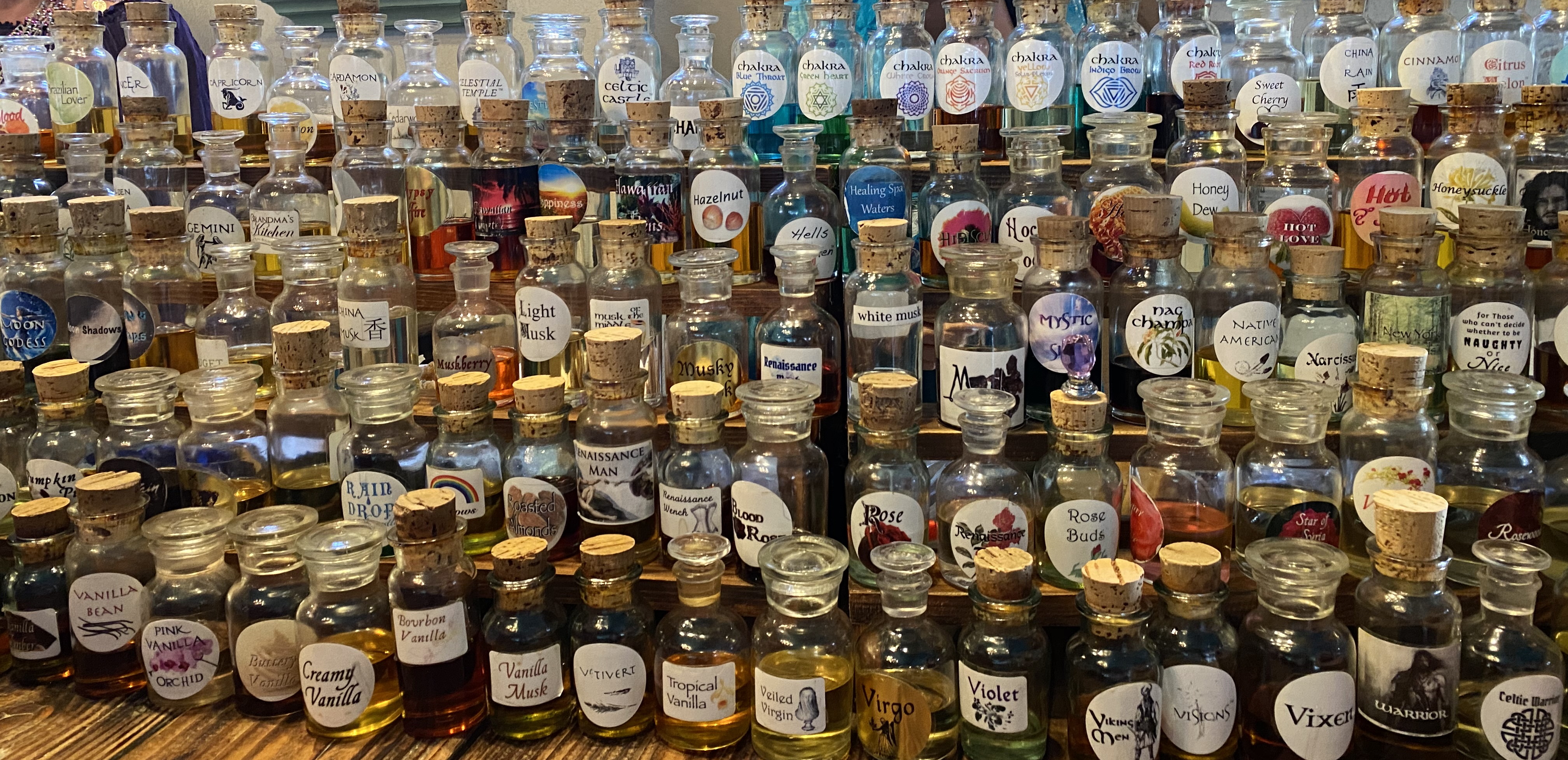
Naming the Voices in my head.

I started naming the voices in my head after hearing a professor talk about Titivillius, the Devil’s Demon who counts up the Monks typos in the monastery copy room.  Counting errors. I have a special voice in my head that does that all the time.  I can recount my life’s failings, missed opportunities, doors-not-walked-through… I named the voice that nags me about my failings.  I named him Titivillius

My big discovery was that once that voice was named, it was easier to yell “SHUT UP TITIVILLIUS.”

My voices are easier to manage if they have names.

I began to wonder if other voices were in my head and what names they might need.  Amid the chatter about my life failings, I noticed that once in a while a theme would emerge about stuff I did right. Not the big projects that I had messed up, but the things that I think I do really well… Engaging the checkout clerks at stores and making them laugh. Performing street theater with total strangers to see if I can get them to laugh or engage in a discussion.  I am pretty good at that!  I make people giggle and laugh and sometimes laugh out loud.  Pretty good Alex.

Who said that?  What is that voice?  What is the voice in my head that sees good stuff and congratulates me or approves or just gives a nodding gesture. I tried to figure out the name of the voice in my head that was positive, upbeat, congratulatory, and focused on success.  It didn’t matter what success, just that a voice was being positive. 

What is that voice’s name?

Maybe Prof? Or Mentor? Maybe I could name that voice after one of my professors. But none of them were particularly congratulatory or positive. Maybe I should name that voice for my mother, she was always upbeat on my stuff… But her voice is laden with that recording she left behind… “We only wonder what would have happened if you had only worked harder.”

I used to joke about the titles I had at UVI.  I was Adjunct Visiting Assistant Professor of Communication. That is about as far from “Full Professor Emeritus” as possible.  I wanted to retire as “Adjunct Visiting Assistant Professor EMERITUS” 

I actually got my only promotion when the students voted me the Graduation parade marshal, and when I opened the graduation program, there was my name with “Assistant Professor”

No Adjunct!  No Visiting! I was REAL!

So what’s the name for the voice in my head that tells me I am doing something right?

Emeritus!

A New Year’s Tale by Vladimir Dudintsev

Read by Alexander Randall. This book was required reading in my 9th grade English class. It changed my life. It runs an hour and has illustrations. .”I’m excited to share the recording of last night Literary Café event at the Centre for Modern Aging Princeton. In this session, I am reading ‘A New Year’s Tale’ by Vladimir Dudintsev. Dive into the enchanting world of storytelling and let the narrative take you on a journey. Recorded in Princeton NJ on January 22, 2024.

I hope this moves you too.

If the link below does not work go to the facebook link and listen there.

#CenterForModernAgingPrinceton #LiteraryCafe #VladimirDudintsev #StorytellingMagic

https://fb.watch/pMbnyrzlmH/

What’s on your deathbed playlist?

What if being dead includes hearing the last song forever? Like that song lingers in your ear… The one you can’t get rid of… Remember when you got a tune stuck in your head… Looping endlessly in your music mind, playing over and over and over again. Call it a catchy tune. Like the music in the elevator, and you spent the rest of the day humming “Amazing Grace” as played by the Hollyridge Strings or Montovani’s Orchestra. You can’t shake that tune. You’re stuck with it until some other tune catches you and you hum that one until another… Sometimes it’s embarrassing. You catch yourself humming a really stupid song that slipped through your defenses. There you are with “It’s a Small Small World” stuck in your music mind loop.

What if being dead means hearing that last tune forever. As if your eternal spirit carries that last bit of music into the hereafter and it lingers there.  Better hope you got a good one.  Eternity is a long time.  If you’re going to listen forever it really matters what you’re hearing at the end. People who are expert in Hospice care tell us that dying people continue to hear what’s going on around them unto the very last moments. That’s why it makes sense if you visit someone in a Hospice to talk about the fun things you did together. Even if they seem far gone.  They can barely squeeze your hand or bat an eyelash, yet they still hear everything.  Be sure to talk about your fondest memories. Talk about music that you both loved. Why not play that piece of music?  Heaven forbid the last thing you hear is somebody stupid ringtone and you spend all of eternity humming that marimba song.

So what is on your deathbed playlist? You do want to choose your deathbed music, don’t you? The sounds around Hospice always seem to be hushed up, as if everybody is trying to be so quiet. What if there was something really upbeat. Or a special song like “Our Song” whatever it is. I sure want to pick the last song I’m gonna hum for the rest of eternity.

What made me even think of this? I was listening to a wonderful band called the Chivalrous Crickets. They play Irish and Celtic stuff with a lot of tin whistle, fiddle and pipes. Some of their stuff is just rips!  A lot of Irish tunes come as a medley with a slow start, something medium in the middle and the third part comes at a frantic pace, rollicking, riotous, rip-roaring, rowdy, and raucous. I was listening to their version of the Bonnie Prince Charlie March, tapping my foot, slapping my thigh.  I thought, “this is exactly what I want to be able to hear for the rest of eternity.” That started me thinking about my deathbed playlist.

I imagine myself in Hospice. I’m checking out. Last call. But Hospice background music is all quiet, mellow, and serene… I want to romp into eternity with raucous stuff that elevates my spirit, not elevator music.

I want music that makes me want to dance and slap my thigh. If I am lingering at the edge of death, I may just bat my eyelids in time with the music. But if rollicking music can’t arouse me, then I’m gone. That’s what I want to hear as I exit this life. Let me go to eternity whistling a tune that elevates my spirit. 

Everyone has music that makes you feel great. Make a list.  If you get run over by a truck it was a waste of time, but if you are going to linger on a deathbed, then play your list.  Pick your tunes now.  At the very least, make a playlist on Spotify.  Call it the Deathbed Playlist.

I want to strike a deal with that band. I want to pay them a fee now and when I get to hospice, they come and play music that just rips. Play Bonnie Prince Charlie March. Pull out all the stops. Play it through and then do it double time.  If I don’t slap my thigh or tap my foot or wiggle a toe… I’m dead. Tell the doctors. 

My New Book is Out – Dream Wizard Escapes 

My New Book is Out – Dream Wizard Escapes 

It’s a dream story, it’s a great dog story, it’s an adventure story, it’s a bedtime story and a romp in dream land. It is Dream Wizard Escapes, a new novel by Alex Randall. It’s the perfect book to help chase away the nightmares of COVID, shutdown, facemasks and injustice.  

Dream Wizard Escapes is perfect for tweener readers, and perfect for parents to use as a bed time story for younger kids.

The story is set in Boston with our hero, Sandy and his dog Mr. Harris Tweed. Sandy is kidnapped and has to dream his escape.  But he gets captured. And gets tossed in with another kid and they try to escape and get captured again. Tied up and gagged lying in the bottom of a closet, they have to figure an escape plans in their dream world. Their adventure takes them to Knight School where Sandy and Katarina solve their dilemma with the help of other kids at Knight School a lot of squirrels.  It can only happen in dreams.

Dr. Montague Ullman, American Dream Researcher said, “Randall is the ONLY person writing about dreams FOR children.”  The wonderful and educational bedtime story is easily understood by a child, and will definitely appeal to the imagination. Parents will find it engaging when they read it to younger children. It conveys an important message to the child: you can solve problems in your dreams!


Dream Wizard Escapes is also an incredible work of art with beautiful original artwork by professional artist Candace Whittemore Lovely. Her paintings are in museums and private collections; one is in the White House, hence stunning illustrations set in Boston around Beacon Hill. That’s the same neighborhood as Make Way for Ducklings. Whether you get this book for your child, or read it to them or give it to other children, you are helping the children know they can conquer their nightmares. 


The book is available on Amazon and at http://www.dream-wizard.com

About the Author and Illustrator

Alex Randall is a teacher, writer, newscaster and the creator of America’s first e-commerce business, The Boston Computer Exchange. He is Professor of Communication at the University of the Virgin Islands with advanced degrees from Princeton and Columbia. He wrote his doctoral thesis for Margaret Mead about a tribe of dreamers. Dr. Randall spent years teaching all over the world and once lived on Mt. Vernon Square.

Go see http://www.dr-dream.com for more information about dreaming. 

AlexRandall5.com is a rich library of recordings from notable people talking about dreaming 

Candace Whittemore Lovely is a Boston Impressionist. She has won numerous awards and many galleries have given her one-woman shows.  Among her many other credits is painting the official White House portrait of Mrs. Barbara Bush, and the official portrait of Fenway Park for the 1999 All Star Games. She lives in Hilton Head, South Carolina. Her art is available in Boston at the Copley Society and the Nantucket Gallery at #4 India Street.